
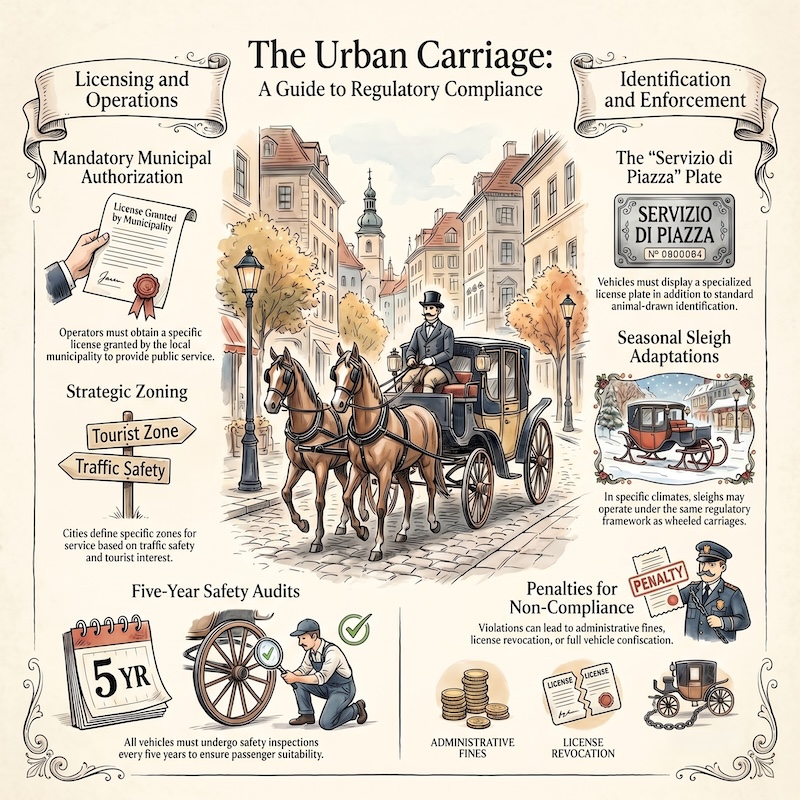
Public service using animal-drawn vehicles is a local transport service that can only be operated with authorization from the municipality. This type of service is often connected to tourism or cultural activities, such as horse-drawn carriages in historic city centers. The municipality determines where and in which areas this service is allowed, considering safety, traffic conditions, and tourist interest.
Vehicles used for this service must be clearly identifiable. In addition to the standard plate required for animal-drawn vehicles, they must display an additional plate indicating “public service”. Municipalities may also designate specific, clearly marked areas where these vehicles can stop and wait for passengers.
To operate this service, a license is required. The requirements for obtaining the license, the types of permitted vehicles, and the rules for periodic inspections are defined by regulation. For example, vehicles must undergo regular inspections, usually every five years, to ensure they remain safe and suitable for transporting passengers.
In certain locations and during specific periods, sledges may also be used for public service when weather conditions allow it. In such cases, the same rules applicable to animal-drawn vehicles are applied as far as possible.
Anyone who operates animal-drawn vehicles or sledges for public service without a license is subject to an administrative fine and may also have the vehicle confiscated. If a license has been obtained but its conditions are not respected, a fine is imposed and the license can be withdrawn. This means the service cannot continue until all requirements are met again.
Studied the theory? Test yourself with 7,000+ official Italian Ministry questions.
📝 Start now with SuperQuizPatente