
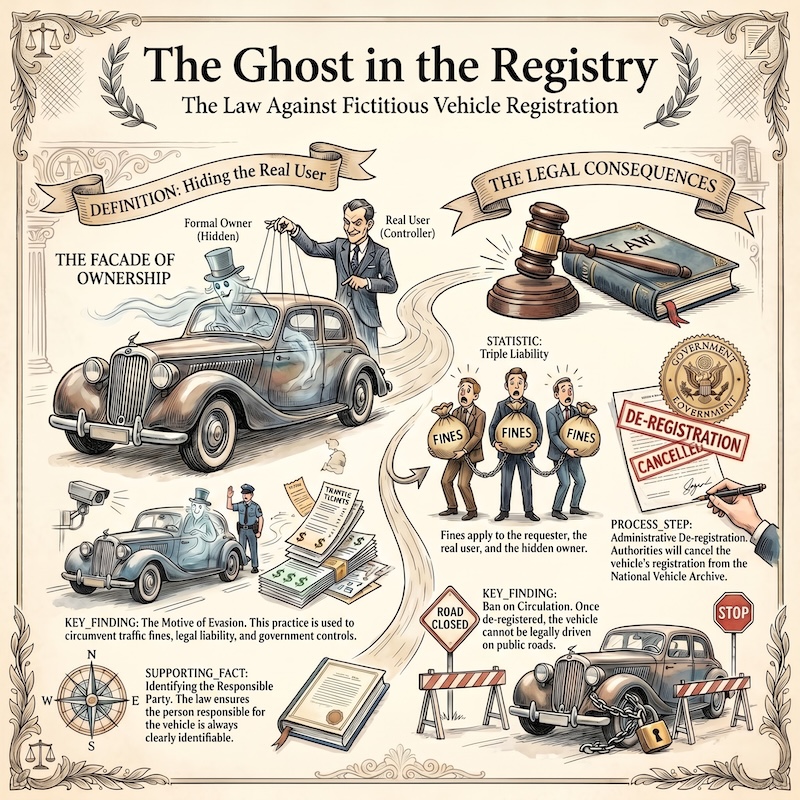
The law prohibits registering a vehicle under the name of a person who is not the real owner or user in order to hide legal responsibility. This means it is not allowed to formally register a vehicle to someone while another person actually uses or controls it, especially if the intention is to avoid fines, liability, or legal checks.
Authorities will not issue a registration certificate if the ownership appears to be fictitious or designed to bypass the law. For example, a vehicle cannot be registered in the name of someone who has no real connection to it while the true user remains hidden.
Anyone who requests or obtains such documents illegally is subject to administrative penalties. Responsibility does not apply only to the person making the request, but also to the person who actually uses the vehicle and the real owner who tries to conceal their identity.
If fictitious ownership is detected, the vehicle is automatically removed from official registers such as the Public Vehicle Registry and the national vehicle database. This means the vehicle loses its legal registration and cannot be used on public roads.
If the vehicle continues to circulate after being removed from the registers, additional penalties apply, similar to those for unregistered vehicles. The removal is carried out after the violation has been definitively confirmed by authorities.
The law also provides for specific checks to identify suspicious situations, especially when many vehicles are involved or when there is a risk of avoiding legal responsibility. The main goal is to ensure that the person responsible for the vehicle can always be clearly identified.
Studied the theory? Test yourself with 7,000+ official Italian Ministry questions.
📝 Start now with SuperQuizPatente