
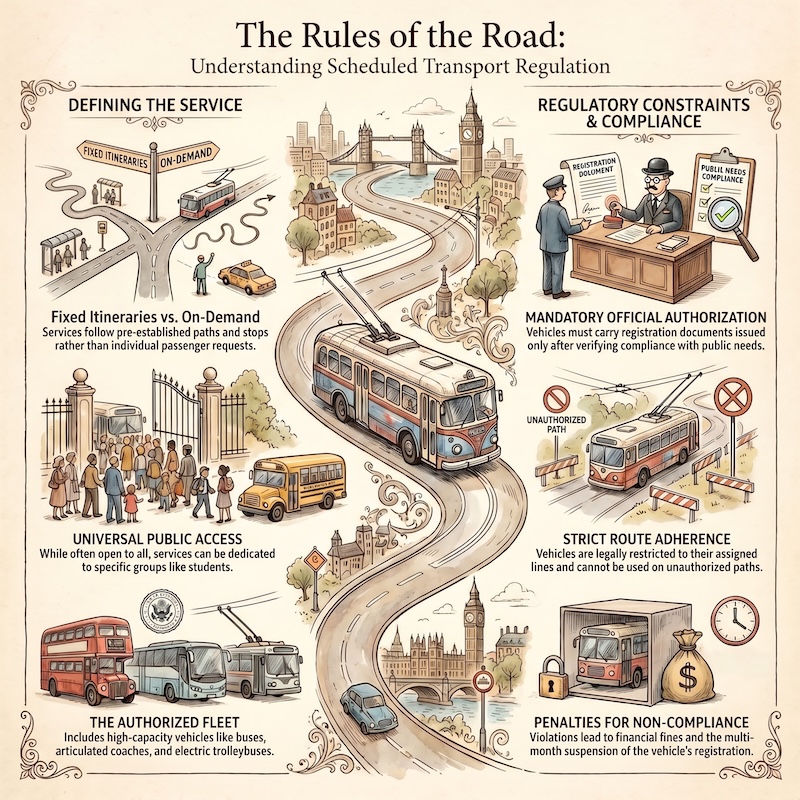
A vehicle is considered to be used for scheduled passenger transport when it carries people along a fixed route with predetermined stops and destinations that have been officially authorized. This type of service is offered to the public in a general way, meaning that anyone can use it, although in some cases it may be intended for specific groups such as students or workers. The key characteristic is that the route is fixed and not arranged individually for each passenger, unlike taxis or hire vehicles with drivers.
Vehicles used for this type of service are typically buses and other large-capacity transport vehicles designed to carry many passengers. This includes articulated vehicles and trolleybuses powered by overhead electric lines. All these vehicles must be specifically designated for public line transport.
To operate legally, the vehicle must have a registration document issued on the basis of an official authorization. This authorization is granted by competent authorities, which ensure that the service complies with regulations and meets public transport needs.
A vehicle authorized for scheduled service can only be used on the routes for which permission has been granted. For example, a bus cannot operate freely on any route but must strictly follow the authorized lines. In some cases, the authority may allow the vehicle to be used for hire services, as long as this does not interfere with the regular operation of the line. In such situations, the vehicle must carry a document specifying where and how it may be used.
In exceptional and temporary situations, vehicles used for scheduled services may be leased to other operators providing the same type of service. This is allowed only with official authorization and under specific rules established by the Ministry of Transport to ensure continuity of public service.
Using a vehicle for scheduled service without it being approved for that purpose, or using it on unauthorized routes, is a violation. Such actions result in financial penalties and suspension of the vehicle’s registration for a period that may last several months. These rules are essential to maintain order, safety, and reliability in public transport systems.
Studied the theory? Test yourself with 7,000+ official Italian Ministry questions.
📝 Start now with SuperQuizPatente