
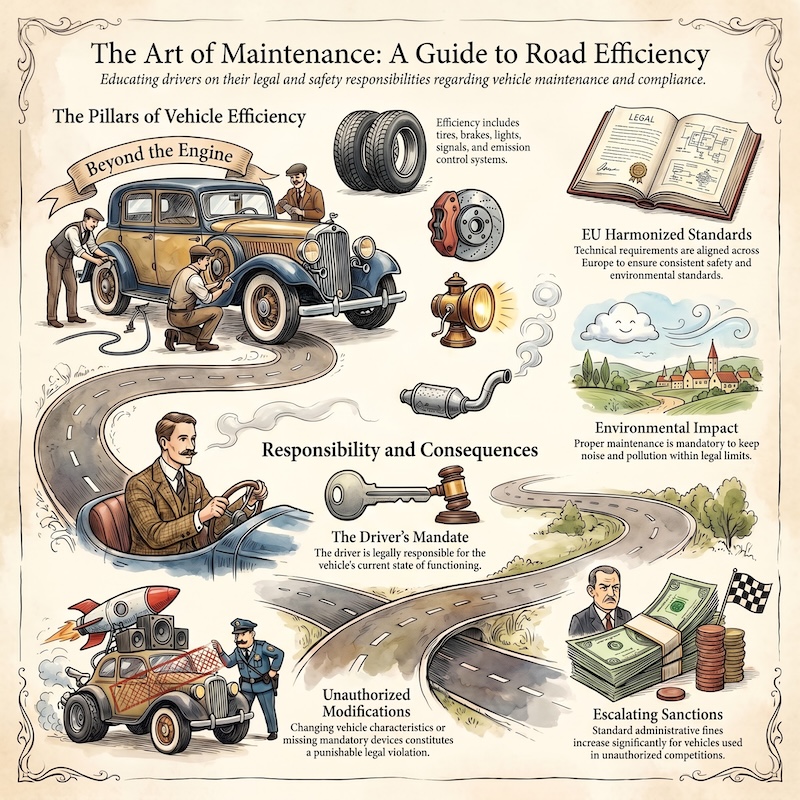
When a vehicle is in use, it must always be kept in maximum efficiency condition. This means that all its components must function properly to ensure road safety, as well as to limit noise and pollution within legal limits.
This does not only concern the engine: efficiency applies to the entire vehicle. Essential elements such as tires, braking systems, lighting and signaling devices, and systems that reduce emissions and noise must all be in good condition. These components are regulated by specific technical standards.
In many cases, these standards are harmonized at the European level. This means that technical requirements are also defined by European Union directives, ensuring consistent standards across countries.
Driving a vehicle that is not in efficient condition is a violation. This can occur, for example, if the vehicle has unauthorized modifications or if mandatory devices (such as lights, brakes, or signaling devices) are not functioning properly or are not correctly installed.
The consequences can be significant: administrative fines are imposed for using a non-compliant vehicle. Penalties are much higher if the vehicle is used in competitions without meeting the required technical standards.
For the theory exam, it is essential to remember that the driver is responsible for the condition of their vehicle. It is not enough for a vehicle to be approved; it must always be maintained in proper working condition. This is crucial not only to avoid penalties but also to ensure the safety of everyone on the road.
Studied the theory? Test yourself with 7,000+ official Italian Ministry questions.
📝 Start now with SuperQuizPatente