
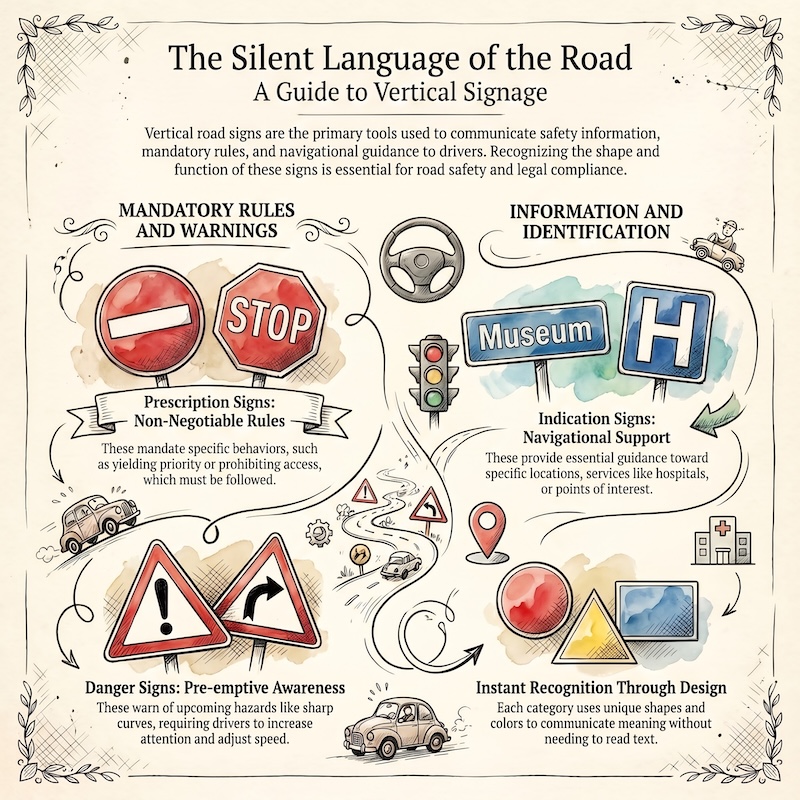
Vertical signs are road signs placed along roads to inform, warn, or impose rules on drivers. They are essential for safety because they allow drivers to anticipate dangerous situations, understand the rules, and navigate correctly.
Warning signs alert drivers in advance to potential hazards on the road, such as dangerous curves, intersections, or roadworks. They do not impose specific actions but require drivers to be cautious and adapt their speed and behavior to the situation.
Regulatory signs indicate mandatory rules that must be followed without exception. They may define right of way, prohibit certain actions, or impose specific obligations. For example, they may indicate who must give way, prohibit entry, or require a certain direction. Ignoring these signs means directly violating traffic rules.
Information signs provide useful guidance for driving and orientation. They help drivers find directions, locations, and services such as fuel stations or hospitals, and identify roads and destinations. Some signs give advance information, others confirm routes, and others indicate place names or points of interest.
Each vertical sign has specific characteristics, such as shape, color, and symbols, which allow it to be recognized immediately even without reading text. These features are defined by regulations to ensure uniformity across the country.
For the theory exam, it is important to understand the difference between the three main categories and remember that regulatory signs are mandatory, warning signs alert, and information signs guide.
Studied the theory? Test yourself with 7,000+ official Italian Ministry questions.
📝 Start now with SuperQuizPatente