
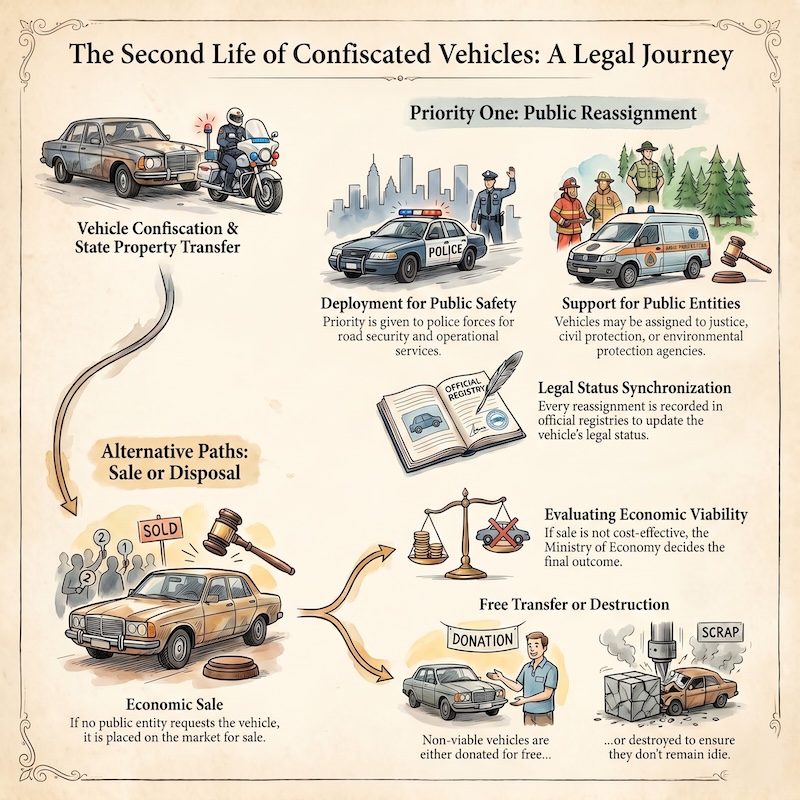
When a vehicle is definitively confiscated, it becomes property of the State. The law clearly establishes how such vehicles must be used.
First, the vehicle may be assigned to police authorities that request it. It is primarily used for activities related to road safety, such as traffic control and operational duties. Alternatively, it may be assigned to other public bodies, such as those involved in justice, civil protection, or environmental protection.
If no public authority requests the vehicle, it is put up for sale. However, if selling it is not economically viable, the State may decide to transfer it free of charge or to destroy it. This decision is made by the competent authority of the Ministry of Economy and Finance.
All decisions regarding the vehicle’s destination are communicated to official registers to update its legal status.
This rule ensures that confiscated vehicles are not left unused but are either used for public purposes or disposed of when it is not convenient to keep them.
Studied the theory? Test yourself with 7,000+ official Italian Ministry questions.
📝 Start now with SuperQuizPatente