
When a vehicle is seized, subject to administrative detention, or confiscated, the law provides a specific procedure for its management and, in some cases, its sale. These operations are not carried out randomly but are entrusted to authorized entities that have signed special agreements with the Ministry of the Interior and the State Property Agency.
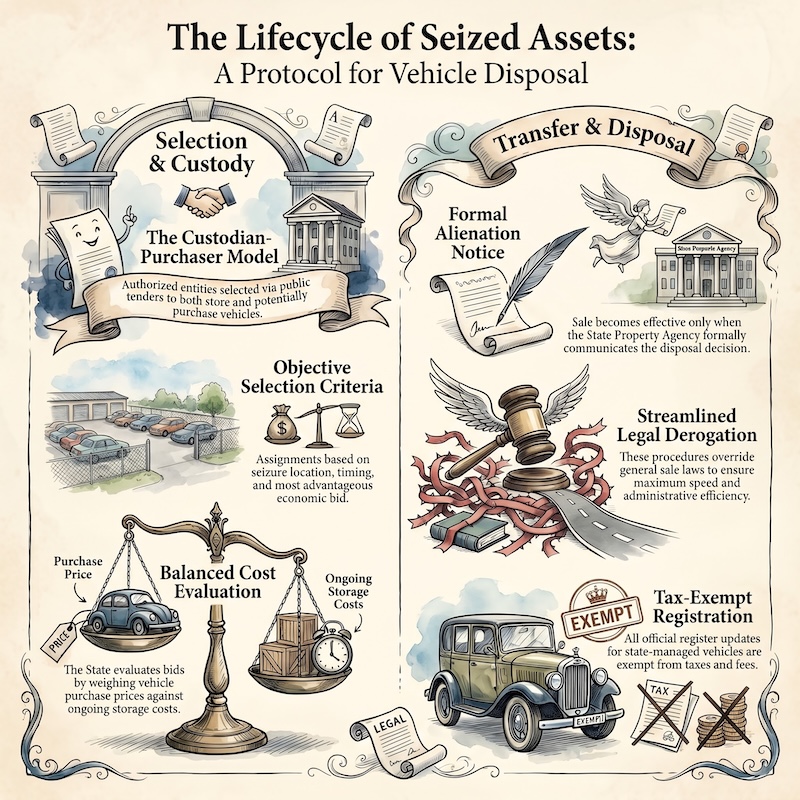
These entities, called custodian-purchasers, are responsible both for storing the vehicles and, in certain situations, for purchasing them. They are selected through public tenders based on objective criteria, such as the place and time of the seizure. The State chooses the most advantageous offers, considering both the purchase price and the cost of storage.
In the case of confiscated vehicles, the sale becomes effective when the State Property Agency formally notifies the custodian-purchaser of the decision to proceed with the sale. This notification has legal value and allows the official vehicle registers to be updated.
These procedures apply even in derogation of general rules on the sale of goods, ensuring greater speed and efficiency in handling seized or confiscated vehicles.
An important aspect is that all administrative operations, such as entries in public registers, are exempt from taxes and fees when they concern the State. This simplifies and speeds up the entire process.
In summary, the rule ensures that seized, detained, or confiscated vehicles are managed in an organized, secure, and transparent way, preventing accumulation and ensuring proper final use or disposal.
Studied the theory? Test yourself with 7,000+ official Italian Ministry questions.
📝 Start now with SuperQuizPatente