
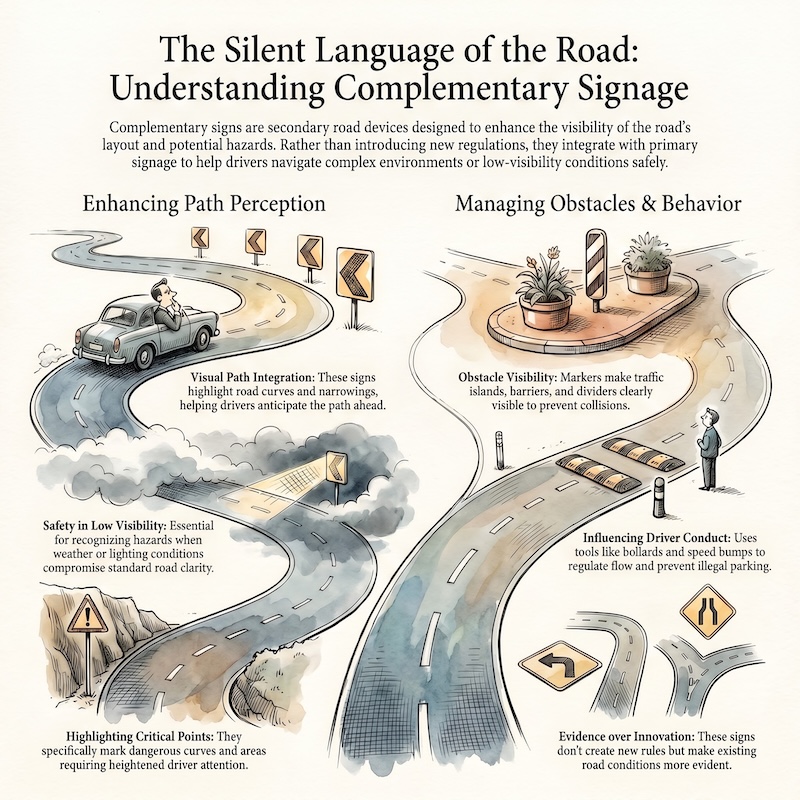
Complementary signs are devices used to improve the visibility and understanding of the road and its features. They do not replace primary road signs but support them, helping drivers better recognize the road layout, hazards, and obstacles, especially in low visibility or complex situations.
These signs highlight the road path, such as curves, direction changes, or narrow sections, allowing drivers to anticipate the route and adjust their driving accordingly. They are also used to indicate critical points, such as dangerous bends, areas with limited visibility, or locations where extra caution is required.
Another important function is to make obstacles visible, whether they are on the road or close to it. These may include traffic islands, barriers, dividers, or other elements that could pose a risk if not clearly indicated.
Complementary signs also include certain road features and installations designed to influence driver behavior. For example, they may prevent parking in specific areas, reduce vehicle speed, or help regulate traffic flow. These can include physical elements like road humps, barriers, or other safety measures.
Their characteristics, such as shape, color, and placement, are defined by regulations to ensure consistency and recognition. For the theory exam, it is important to understand that complementary signs do not introduce new rules but make existing road conditions clearer, improving safety and driver awareness.
Studied the theory? Test yourself with 7,000+ official Italian Ministry questions.
📝 Start now with SuperQuizPatente