
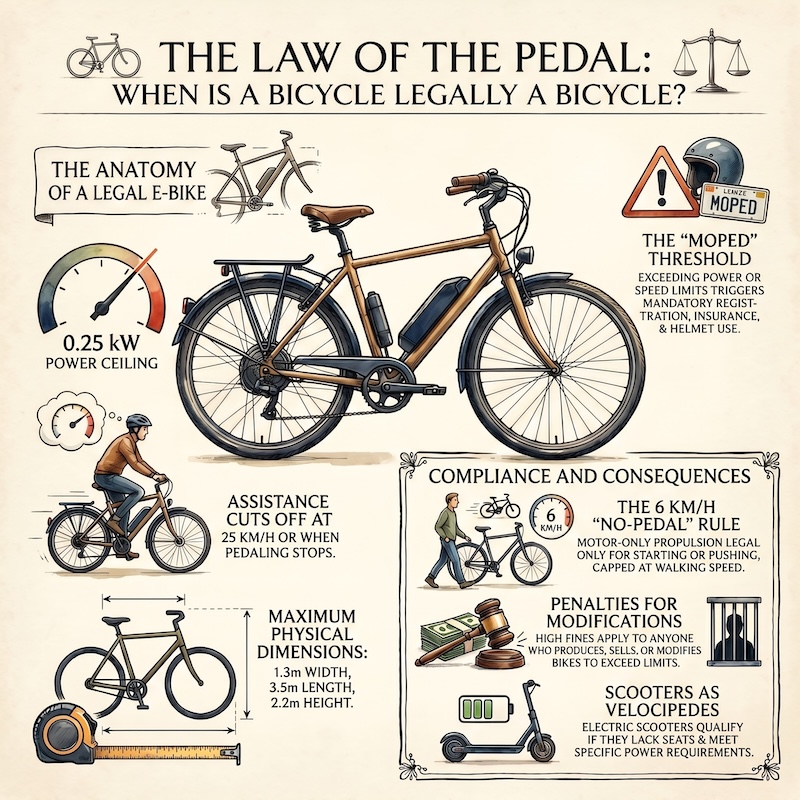
Cycles are vehicles with two or more wheels that move using the muscular force of the person riding them, typically through pedals. A standard bicycle always falls into this category. Pedal-assist electric bicycles are also considered cycles, but only if they meet specific legal requirements.
The electric motor must have limited power, up to 0.25 kW, or up to 0.5 kW if the bicycle is used for transporting goods. The motor assistance must gradually reduce and completely stop when the vehicle reaches 25 km/h or when the rider stops pedaling. Some electric bicycles may include a function that allows the motor to work without pedaling, but in this case the speed must not exceed 6 km/h. This is typically used to help start or move the bicycle at low speed.
If an electric bicycle exceeds these limits, for example due to modifications or design, it is no longer considered a cycle but a moped. This means that different rules apply, such as registration, insurance, and helmet requirements.
Cycles must also comply with size limits. They cannot exceed 1.30 meters in width, 3.5 meters in length, and 2.20 meters in height. For cargo bicycles, the loading platform must be stable and proportionate to the vehicle to ensure safe transport.
The law establishes strict penalties for those who manufacture, sell, or modify electric bicycles that exceed the permitted limits. Selling non-compliant e-bikes or modifying them to increase speed or power can result in significant fines.
In some cases, electric scooters are also classified as cycles, provided they meet specific technical requirements, such as limited power and no seat. When compliant, they follow the same traffic rules as bicycles.
Studied the theory? Test yourself with 7,000+ official Italian Ministry questions.
📝 Start now with SuperQuizPatente