
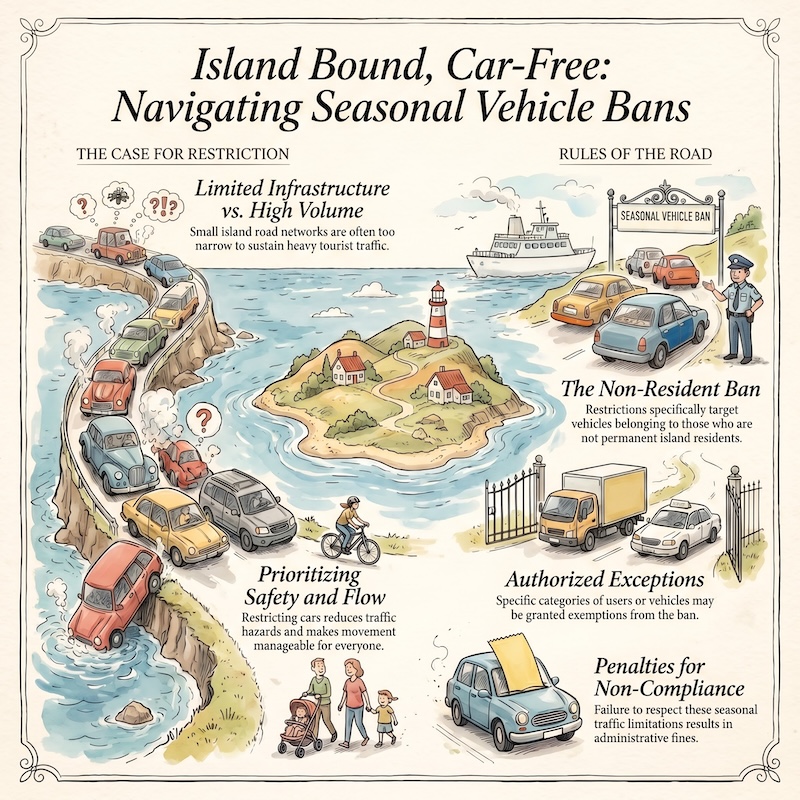
On small islands with particular tourist importance and a limited road network, during the months of highest tourist traffic the entry and circulation of vehicles belonging to people who are not part of the permanent population may be prohibited. This measure is intended to reduce traffic, avoid danger, and make circulation easier to manage in places where roads are few and often not suitable for a high number of vehicles.
The ban may be applied especially when the island has a very limited extra-urban road network and when motor traffic creates particularly serious difficulties or risks. In these cases, the competent authority may adopt a specific measure to limit the access of non-residents’ vehicles during the busiest period.
Exceptions may still be provided for certain categories of users or vehicles. This means that, even when the ban exists, some vehicles may still be allowed to enter and circulate on the island if they fall within the permitted exceptions.
Anyone who does not comply with the obligations, prohibitions, or limitations relating to circulation on small islands is subject to an administrative penalty.
Studied the theory? Test yourself with 7,000+ official Italian Ministry questions.
📝 Start now with SuperQuizPatente