
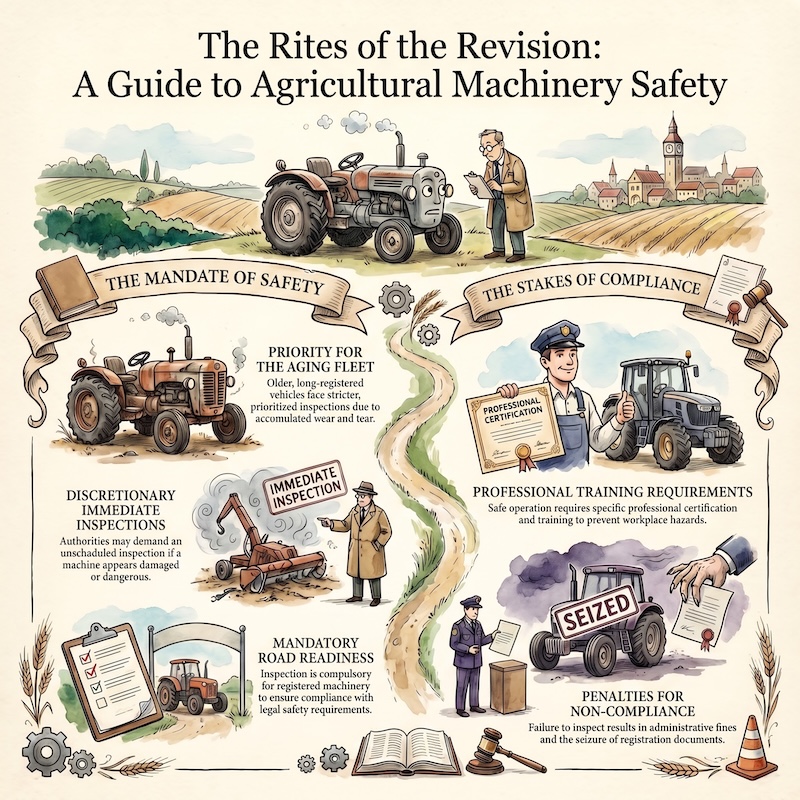
Agricultural machines used on public roads must undergo mandatory periodic inspections to ensure they are safe both for work and for road use. The purpose of these inspections is to verify that the machine remains efficient and continues to meet the minimum safety requirements established by law. This is essential to prevent breakdowns, accidents, and dangerous situations.
Inspections are especially required for machines subject to registration. Priority is given to older machines, as wear over time can reduce safety. For this reason, vehicles that have been in use longer are subject to closer attention during inspections.
Authorities may also require an inspection at any time, even outside the regular schedule, if there are doubts about the machine’s condition. For example, if a machine appears damaged, inefficient, or potentially dangerous, it may be required to undergo an immediate inspection.
The procedures, timing, and methods of inspections are defined by specific regulations, which also establish the technical requirements and efficiency standards that must be met. These rules may be updated in line with European regulations to ensure consistent and modern safety standards.
In addition, specific professional training is required to operate agricultural machines, ensuring that operators are properly qualified and capable of using the equipment safely.
Driving an agricultural machine that has not undergone the required inspection results in an administrative fine. In addition to the fine, the registration document or technical certificate may be withdrawn until the machine is brought into compliance. This highlights the importance of inspections as a key element of safety.
Studied the theory? Test yourself with 7,000+ official Italian Ministry questions.
📝 Start now with SuperQuizPatente