
When approaching an intersection, a driver must always exercise maximum caution, as intersections are among the most dangerous points in road traffic. The main goal is to avoid accidents, so it is necessary to carefully observe other vehicles, road signs, and road conditions.
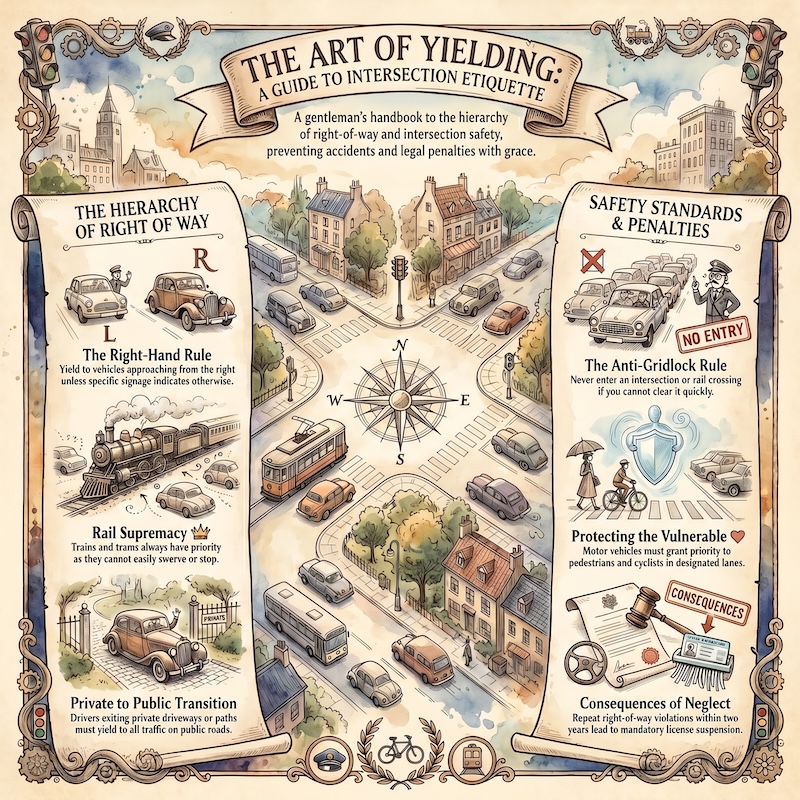
The general rule states that when two vehicles are about to enter an intersection or their paths cross, priority must be given to the vehicle coming from the right, unless there are signs indicating otherwise. This is one of the fundamental rules of the road and applies when no other instructions are present.
At railway and tram crossings, vehicles on rails always have priority unless signs indicate otherwise. This is because they cannot easily change direction or stop quickly like other vehicles.
At some intersections, priority is regulated by specific signs set by the competent authority. In these cases, drivers must follow the instructions given by the signs, such as stopping or yielding.
In pedestrian areas, urban cycling streets, and cycling zones, drivers of motor vehicles must pay particular attention to pedestrians and cyclists, who are more vulnerable road users. Motor vehicles must also give priority to bicycles traveling on cycle lanes marked by a dashed line.
When there is a stop line together with a sign, the driver must stop before entering the intersection. This obligation is essential for ensuring safety and proper traffic flow.
Drivers entering a road from places not open to public traffic, such as private yards or parking areas, must always stop and give way to vehicles already on the road. The same applies when entering from paths, tracks, or cycle paths, even if their characteristics change just before joining the road.
It is forbidden to enter an intersection or a railway or tram crossing if there is no possibility of clearing it quickly. In other words, a driver must not enter if traffic conditions would cause them to block the intersection.
Drivers of rail vehicles must also respect negative priority signals. Failure to comply with right-of-way rules results in administrative penalties. If a driver commits the same violation at least twice within two years, their licence may also be suspended.
Studied the theory? Test yourself with 7,000+ official Italian Ministry questions.
📝 Start now with SuperQuizPatente