
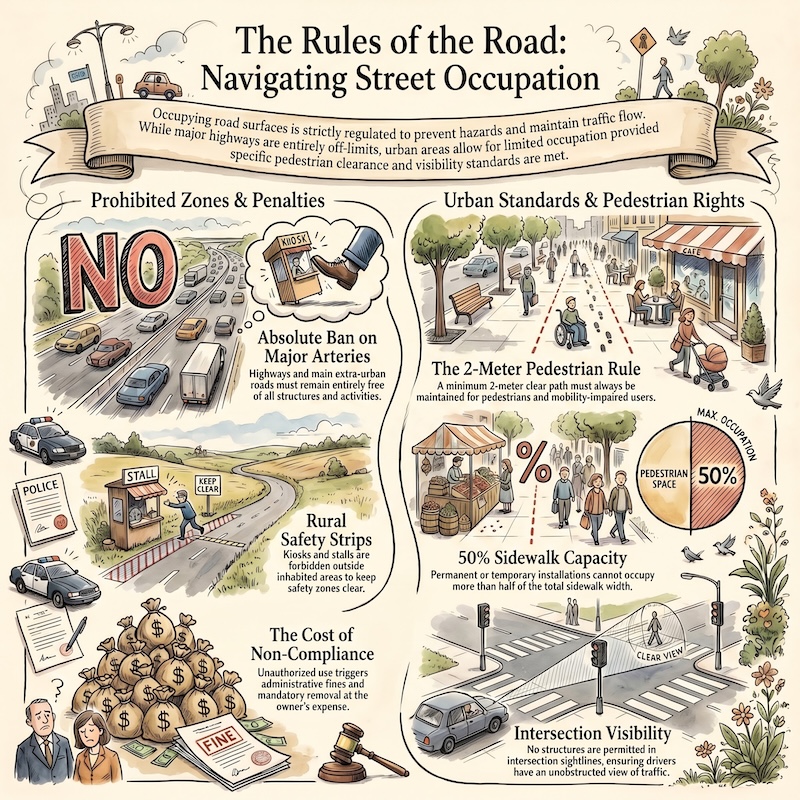
Road occupation is strictly regulated because it can create hazards and obstruct traffic flow. On major roads such as motorways and main extra-urban roads, any occupation of the roadway is completely prohibited, including markets, fairs, vehicles, tents, or temporary structures. On urban or local roads, occupation may be allowed only under specific conditions, such as providing an alternative route for traffic or ensuring that, in areas of historical or environmental importance, it does not interfere with traffic or compromise safety.
Even when a temporary authorization is granted, for example to hotels for parking or loading and unloading luggage, all safety and traffic flow conditions must still be respected.
Outside built-up areas, it is not allowed to install kiosks, newsstands, or similar structures within road safety zones, as these areas must remain clear for safety reasons.
In urban areas, some occupation is permitted but with strict limits. Sidewalks may be occupied only up to half of their width, and installations must be placed close to buildings. A free space of at least two meters must always remain for pedestrians, including those with reduced mobility. It is also strictly forbidden to occupy visibility areas at intersections, as this would reduce drivers’ ability to see oncoming traffic.
Anyone who occupies the road without authorization or fails to comply with the conditions of a permit is subject to an administrative fine. In addition, they must remove any unauthorized structures at their own expense and restore the original condition.
Studied the theory? Test yourself with 7,000+ official Italian Ministry questions.
📝 Start now with SuperQuizPatente