
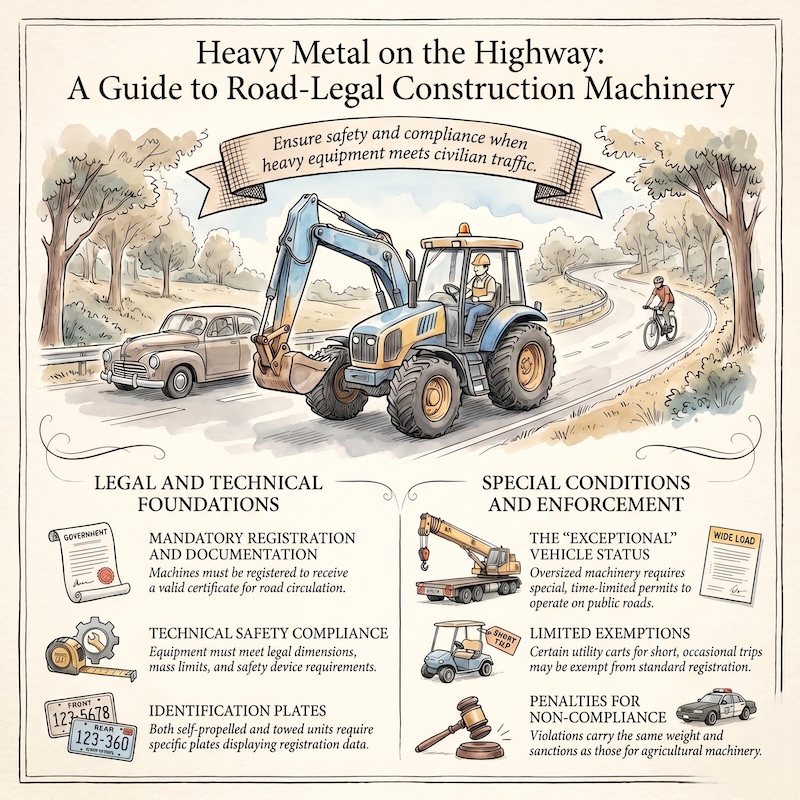
Operating machines are allowed to travel on public roads only if they meet specific technical requirements. They must comply with legal limits regarding size and weight and must be built and equipped with the necessary devices to ensure safe circulation. Although these machines are mainly designed for work, they must still be suitable for safe movement in traffic.
To circulate, these machines must be registered with the competent authorities, which issue a registration document to the owner. However, certain specific categories, such as some types of carts used for short and occasional movements, may be exempt from registration, provided they meet particular technical conditions set by law.
Operating machines are also subject to many of the same rules as agricultural machines, including those related to type approval, inspections, circulation documents, license plates, and modifications. If a machine exceeds the legal limits for size or weight, it is considered exceptional and may only circulate with a special authorization, which is valid for a limited period and must be renewed.
Self-propelled operating machines must have a license plate with registration data, while towed ones must have a specific plate. The procedures for registration, document updates, and administrative processes are defined by regulations and are carried out electronically.
Anyone who violates these rules is subject to the same administrative penalties as those applied to agricultural machines. This shows that even though operating machines are special-purpose vehicles, they must follow strict rules when used on public roads.
Studied the theory? Test yourself with 7,000+ official Italian Ministry questions.
📝 Start now with SuperQuizPatente