
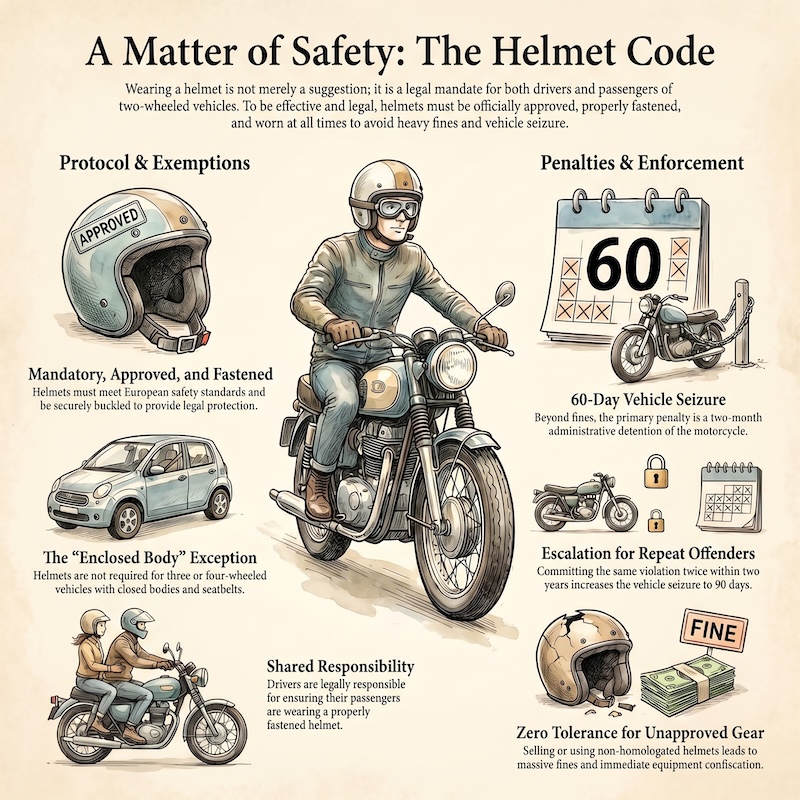
When riding mopeds and motorcycles on the road, both the rider and any passenger are required to wear an approved protective helmet and keep it properly fastened. It is not enough to simply wear the helmet; it must also be securely fastened, because only in this way can it provide effective protection in the event of an accident. The helmet must comply with European and international approval standards, which ensure minimum safety requirements.
There are some exceptions to this rule. The helmet is not required for drivers and passengers of three- or four-wheeled vehicles with a closed body, such as certain covered tricycles. The requirement also does not apply to vehicles equipped with a protective safety cell similar to that of cars, including restraint systems like seat belts and devices that ensure a high level of protection in case of a crash.
Anyone who does not wear a helmet, or wears it incorrectly, is subject to a financial penalty. If a passenger is not wearing a helmet, the driver is also held responsible, as they must ensure that the passenger complies with the law.
In addition to the fine, an important additional penalty applies: administrative detention of the vehicle for sixty days. If the same violation is committed more than once within two years, the detention period may be extended to ninety days. During this time, the vehicle cannot be used and is entrusted to its owner.
The law also provides penalties for those who import, produce, or sell non-approved helmets. In these cases, the fines are much higher because such behavior puts many users at risk. Non-approved helmets, even if already used, are subject to seizure and confiscation.
For theory exam preparation, it is essential to remember that the helmet is not only a legal requirement but a key safety device. It must always be approved, worn correctly, and properly fastened. Failing to follow these rules leads to significant penalties and, more importantly, exposes riders to serious risks in the event of an accident.
Studied the theory? Test yourself with 7,000+ official Italian Ministry questions.
📝 Start now with SuperQuizPatente